

Read practical advice
Explore straightforward guides for choosing, using and caring for garden products.
Visit the Advice CentreOutdoor plants
Everything useful in one place, with the most important information kept separate from the buying controls above.
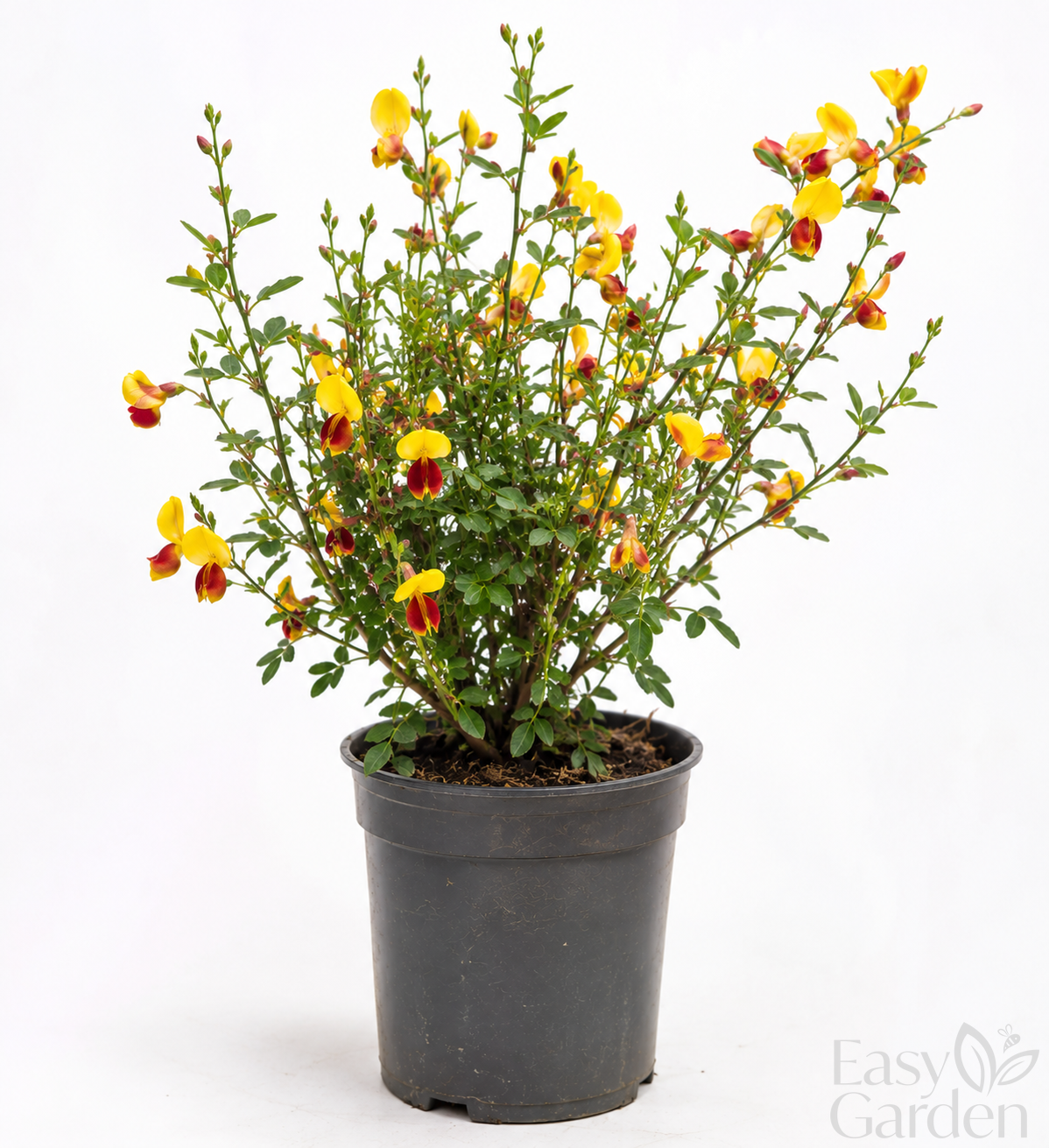
Cytisus 'Firefly'
Supplied as a potted shrub in an 11cm pot (P11)
Distinctive two-tone flowers combining golden yellow with rich reddish-bronze
Abundant late spring blooms carried along slender, arching stems
Bushy, upright growth developing into a graceful rounded shrub
Small, deep green leaves that allow the colourful flowers to stand out
Excellent for sunny, free-draining borders and gravel gardens
Cytisus 'Firefly' is a colourful ornamental broom grown for its striking combination of golden-yellow and reddish-bronze flowers. From late spring into early summer, masses of small, pea-shaped blooms appear along its slender green stems. The golden petals contrast with the darker, mahogany-toned wings, creating a lively two-colour display that distinguishes 'Firefly' from traditional yellow-flowering brooms.
This deciduous shrub develops an upright, bushy shape with branches that arch gently as they mature. Its fine stems and small, three-part leaves give it an open, light appearance, making it particularly attractive among ornamental grasses, gravel and lower-growing perennials. Reaching approximately 1–1.5m in height and spread, 'Firefly' is well suited to sunny garden borders where drainage is reliable and the soil is not excessively rich.
Unusual flower colouring: The golden-yellow blooms have contrasting reddish-bronze wings, giving the flowers a distinctive two-tone appearance.
A generous spring display: Flowers appear along the branches rather than only at the shoot tips, covering much of the shrub during its main season.
Elegant green stems: Slender, gently arching shoots provide attractive structure even when the plant is not flowering.
Well suited to leaner soils: It performs particularly well in lighter, less fertile ground where some moisture-loving shrubs struggle.
A colourful border companion: The yellow and bronze-red flowers pair beautifully with purple alliums, blue-flowering perennials and silver-leaved plants.
| Attribute | Information |
|---|---|
| Botanical Name | Cytisus 'Firefly' |
| Common Name | Broom 'Firefly' |
| Cultivar | 'Firefly' |
| Plant Type | Deciduous flowering shrub |
| Flowers | Golden-yellow, pea-shaped blooms with reddish-bronze wings |
| Flowering Period | Late spring to early summer, generally May–June |
| Foliage | Small, deep green, three-part leaves |
| Growth Habit | Bushy and upright, with slender, arching stems |
| Mature Height | Approximately 1–1.5m |
| Mature Spread | Approximately 1–1.5m |
| Time to Maturity | Approximately 2–5 years |
| Position | Full sun |
| Soil | Light, freely draining, preferably relatively low in fertility |
| Soil pH | Neutral to slightly acidic preferred; tolerates some alkaline conditions |
| Hardiness | RHS H5, approximately −15°C to −10°C |
| Pruning | Light trimming after flowering; avoid cutting into old wood |
| Best Uses | Sunny shrub borders, gravel gardens and informal planting schemes |
Plant 'Firefly' in full sun, where it will produce its strongest flowering display and maintain a naturally bushy habit.
A south- or west-facing border, sunny gravel garden or open planting position is particularly suitable.
Choose its permanent position carefully. Cytisus develops roots that dislike disturbance, so young plants are best planted directly into their intended location rather than repeatedly moved.
Allow approximately 1–1.5m of space for the shrub to develop its mature outline.
Water thoroughly after planting to settle the soil around the root ball.
During the first growing season, check soil moisture and water during dry periods while the roots establish. Allow the upper soil to begin drying between waterings.
Once established in suitable ground, 'Firefly' generally copes well with periods of dry weather. Additional watering is most useful during prolonged drought.
Avoid keeping the root area constantly wet, particularly in cool weather.
Plants temporarily retained in small pots will dry out faster than established garden specimens and should be checked more frequently.
'Firefly' performs best in light, freely draining soil that is not excessively fertile.
Sandy, gravelly and well-drained loamy soils are particularly suitable. Neutral to slightly acidic conditions are preferred, although the plant can tolerate some lime.
Avoid shallow, strongly chalky soils where nutrient-related yellowing may develop.
Good drainage is especially important in Ireland, where heavy winter rainfall can leave clay soils saturated for long periods. Where drainage is poor, consider a raised planting area rather than placing the shrub in a waterlogged border.
Avoid adding excessive manure or rich fertiliser, as vigorous soft growth is less desirable than the cultivar's naturally balanced shape.
Cytisus 'Firefly' has an RHS H5 hardiness rating, indicating tolerance of approximately −15°C to −10°C in suitable conditions.
It is hardy in many Irish gardens, with freely draining soil helping protect the roots through wet winters.
The shrub is deciduous, so its small leaves are shed as the growing season ends. The slender green stems remain visible during winter.
Young plants in containers are more exposed to freezing temperatures than those established in the ground. Protect the root ball during prolonged severe frost and ensure pots drain freely.
'Firefly' requires little pruning when allowed to develop its natural upright, arching habit.
If shaping is needed, lightly shorten the recently flowered green shoots immediately after blooming.
Do not cut hard into old, woody stems. Cytisus often fails to produce new growth from mature wood, and severe pruning can permanently spoil its shape.
Remove dead or damaged branches when necessary. Gentle, regular shaping is preferable to attempting major renovation after the shrub has become overgrown.
In suitable garden soil, 'Firefly' generally requires little supplementary feeding.
Avoid high-nitrogen fertilisers, which can encourage excessive leafy growth without improving flowering.
Keep the planting area free from competing weeds while the young shrub establishes.
A light layer of gravel mulch can help suppress weeds and keep the base of the plant tidy without retaining excessive moisture.
Sunny shrub borders: Provides vivid yellow and bronze-red flowers among spring and early summer perennials.
Gravel gardens: Its preference for freely draining, relatively lean soil makes it particularly appropriate for gravel-based planting.
Cottage gardens: The abundance of pea-shaped flowers and gently arching branches suits informal planting arrangements.
Mixed planting with ornamental grasses: The fine green stems contrast with the broader textures of grasses and silver-leaved perennials.
Open, well-drained garden spaces: A useful flowering shrub where full sun and good drainage are available.
Cytisus 'Firefly' is a deciduous shrub, so the loss of its small leaves in autumn is normal. Its green stems remain part of its appearance through winter.
Brooms can become woody and less attractive with age. Planting 'Firefly' in a suitable permanent position and giving it only light pruning after flowering will help maintain its natural form.
The plant is best suited to open, sunny ground with good drainage rather than persistently damp or heavily enriched soil.
Product: Cytisus 'Firefly'
Botanical Name: Cytisus 'Firefly'
Cultivar: 'Firefly'
Common Name: Broom 'Firefly'
Pot Size: 11cm (P11)
Supplied Format: Potted flowering shrub
Product Barcode / SKU: 8712044330167
Choose with confidence
Use the Plant Finder, practical advice or our in-store team before deciding.
Explore straightforward guides for choosing, using and caring for garden products.
Visit the Advice CentreVisit Easy Garden to compare products in person and speak with our team.
Plan your visit