

Read practical advice
Explore straightforward guides for choosing, using and caring for garden products.
Visit the Advice CentreIndoor plants
Everything useful in one place, with the most important information kept separate from the buying controls above.
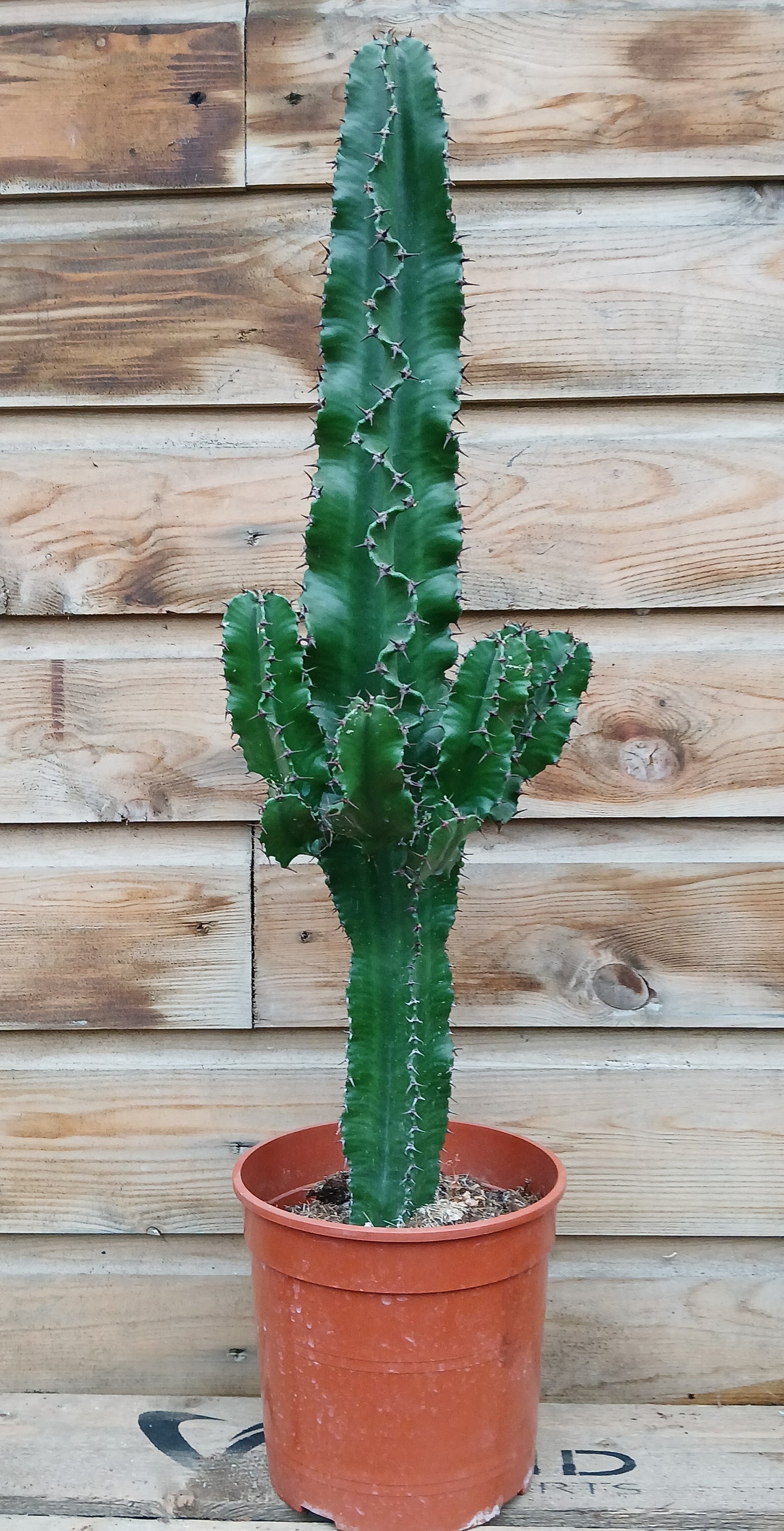
Euphorbia ingens – supplied in a P21 pot
Plant Highlights: Tall, sculptural branching stems • Architectural silhouette • Ideal for bright, sunny interiors • Low-maintenance once established
Euphorbia ingens, commonly known as the Candelabra Tree, is a striking succulent grown for its bold, upright form. Its thick, ribbed green stems branch naturally with age, creating a dramatic candelabra-like silhouette that makes an impressive focal point in bright indoor spaces.
Although often mistaken for a cactus, Euphorbia ingens belongs to the spurge family. Its clean architectural lines suit contemporary interiors and pair well with other succulents and desert plants.
| Feature | Details |
|---|---|
| Botanical Name | Euphorbia ingens |
| Common Name | Candelabra Tree |
| Plant Type | Indoor succulent |
| Supplied Form | P21 pot |
| Foliage | Leafless succulent stems with small spines along the ribs |
| Position | Bright light with some direct sun |
| Watering | Allow the compost to dry thoroughly between waterings |
| Growing Medium | Free-draining cactus or succulent compost |
| Mature Size | Indoors typically reaches 1.5–3 m in height with a spread of 0.5–1.5 m (or up to 12 m in native habitat) |
Position in the brightest room available, ideally close to a south- or west-facing window where it can receive several hours of direct or bright filtered sunlight each day. Rotate the pot occasionally to encourage even growth.
Avoid placing the plant in cold, draughty locations or anywhere temperatures fluctuate significantly.
Water sparingly, allowing the compost to dry out completely before watering again. Reduce watering considerably during the winter months when growth slows. Always ensure excess water drains away freely, as prolonged wet compost can damage the roots.
Feed once a month during the growing season with a fertiliser suitable for cacti and succulents, following the manufacturer's instructions.
Like other spurges, Euphorbia ingens produces a white milky sap if damaged. This sap can irritate the skin and eyes and is toxic if ingested, so wear gloves when pruning or repotting and keep the plant out of reach of children and pets.
Choose with confidence
Use the Plant Finder, practical advice or our in-store team before deciding.
Explore straightforward guides for choosing, using and caring for garden products.
Visit the Advice CentreVisit Easy Garden to compare products in person and speak with our team.
Plan your visit