

Read practical advice
Explore straightforward guides for choosing, using and caring for garden products.
Visit the Advice CentreOutdoor plants
Everything useful in one place, with the most important information kept separate from the buying controls above.
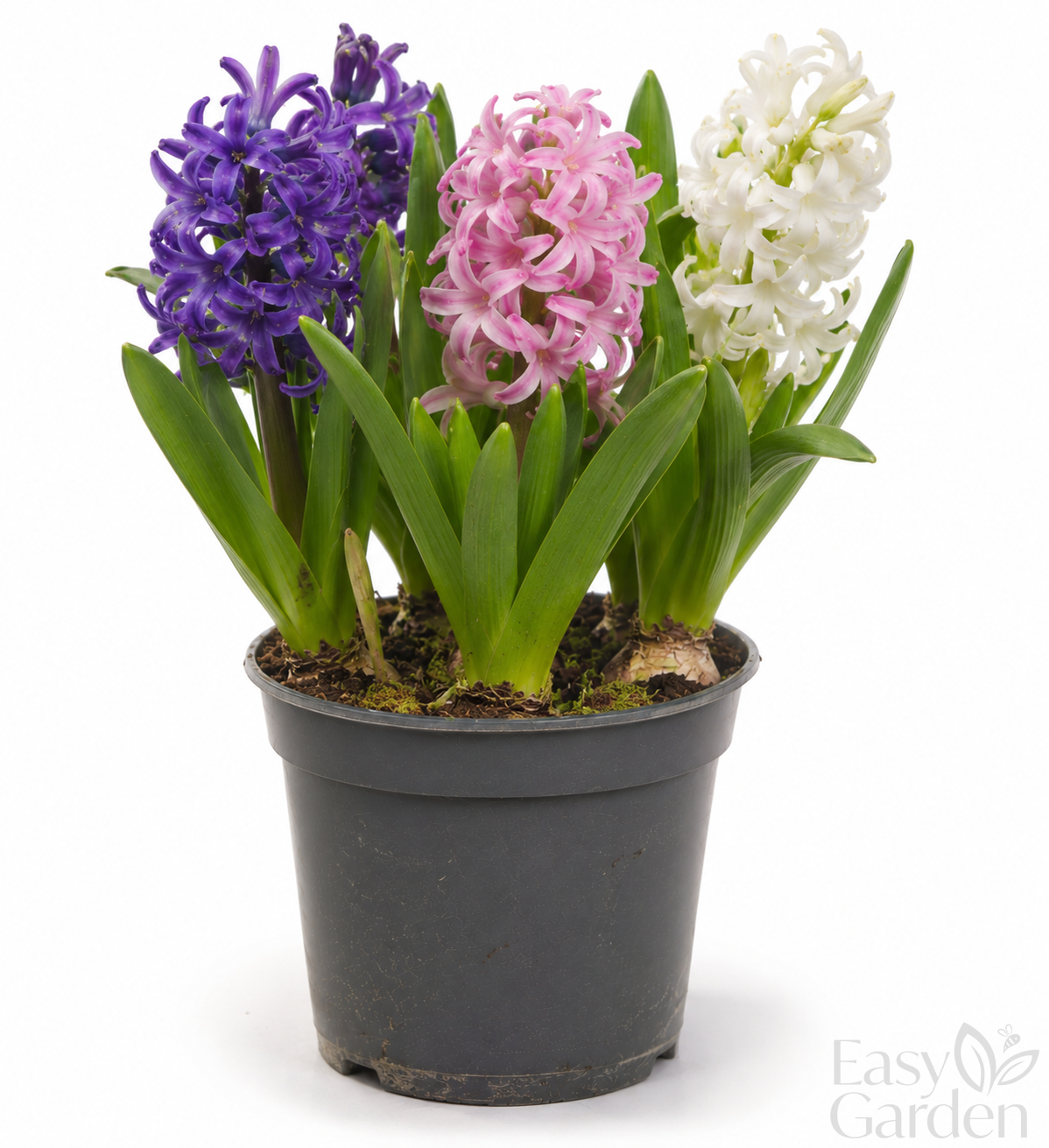
Hyacinthus – Mixed Selection
Supplied in a 13cm pot (P13)
Plant Highlights: Densely packed, fragrant spring flowers • Colourful upright flower spikes • Fresh green, strap-shaped foliage • Suitable for outdoor pots and borders • Can also be enjoyed indoors in a cool, bright room
Hyacinths are much-loved spring flowering bulbs, recognised for their rich fragrance and densely packed spikes of colourful flowers. Each upright stem carries numerous small, waxy, bell-shaped blooms surrounded by thick, glossy green leaves. Flower colours across the range include shades of blue, purple, pink, white and other spring tones, creating a cheerful display as the gardening season begins.
Supplied in a convenient 13cm pot, these seasonal bulbs are particularly attractive near doorways, on sheltered patios and along garden paths, where their distinctive fragrance can be appreciated. They can also be brought indoors for a temporary flowering display in a cool, bright room. Their compact seasonal habit makes them useful for adding colour to small spaces without requiring a permanent planting position.
Wonderful spring fragrance: Hyacinths produce a distinctive, sweet perfume that is especially noticeable when the flowers are enjoyed close to a doorway or seating area.
Beautifully packed flower spikes: Numerous individual blooms combine to form a bold, upright flowerhead.
A welcome sign of spring: Their colourful flowers provide a cheerful seasonal display after the quieter winter months.
Useful for small spaces: The upright flower spikes make a strong impression without needing a large container or border.
Bulbs can be kept: After flowering, the bulbs may be planted in the garden for future spring displays, although subsequent flowers are often smaller.
| Attribute | Information |
|---|---|
| Botanical Name | Hyacinthus |
| Common Name | Hyacinth |
| Plant Type | Spring-flowering bulbous perennial |
| Foliage | Thick, glossy, strap-shaped green leaves that die back after flowering |
| Flowers | Dense, upright spikes of small, waxy, bell-shaped flowers |
| Flower Colour | Varies across the selection; may include blue, purple, pink, white and other shades |
| Fragrance | Strong, sweet floral scent |
| Flowering Period | Usually March to April outdoors; prepared bulbs may flower earlier indoors |
| Seasonal Interest | Spring flowers and fresh green foliage |
| Growth Habit | Compact, upright seasonal growth emerging from underground bulbs |
| Typical Flowering Height | Approximately 20–30cm, varying with the selection and growing conditions |
| Position | Full sun or partial shade outdoors; bright, cool conditions indoors |
| Soil | Moderately fertile, well-drained garden soil |
| Compost | Free-draining, peat-free multipurpose compost |
| Watering | Keep moderately moist during active growth, avoiding waterlogging |
| Hardiness | Generally hardy outdoors in well-drained soil; container-grown bulbs need protection during severe frost |
| Planting Use | Spring containers, border displays and temporary indoor flowering arrangements |
Outdoors, place hyacinths in full sun or partial shade. A bright position encourages sturdy flower stems and a colourful spring display.
Sheltered patios, garden borders and positions near doorways are particularly suitable, allowing their fragrance to be enjoyed as you pass.
For indoor displays, choose a cool, bright room with good natural light. Avoid placing flowering hyacinths directly above radiators or beside strong heat sources, as excessive warmth can shorten flowering and encourage weak, leaning stems.
Keep the compost lightly and evenly moist while the leaves and flower stems are actively growing. Check the surface regularly and water when it begins to dry.
Avoid overwatering or allowing the pot to stand in water, as hyacinth bulbs can rot in persistently wet conditions.
Outdoor pots may need additional watering during dry spring weather, while indoor pots should be checked according to room temperature and compost moisture.
After flowering, continue watering while the leaves remain green. Gradually reduce watering as the foliage naturally yellows and dies back.
Hyacinths grow best in moderately fertile, well-drained soil. They tolerate a range of garden soil types but perform poorly in ground that remains saturated.
For container growing, use a quality peat-free multipurpose compost with adequate drainage. A small addition of horticultural grit can improve drainage where needed.
When planting bulbs into the garden after flowering, choose a sunny, well-drained position. Heavy Irish soils that remain wet through winter may need improvement or an alternative planting location.
Hyacinths are generally hardy spring bulbs when planted in suitable garden soil. Their underground bulbs remain dormant through much of the year, with fresh growth emerging as conditions become favourable.
In exposed locations, container-grown bulbs are more vulnerable to prolonged freezing and excess winter moisture. Move pots to a sheltered position during severe frost and ensure water can drain freely.
Indoor flowering hyacinths prefer cool conditions, ideally around 10–18°C, rather than the constant warmth of a heavily heated room.
Hyacinths require relatively little maintenance during their spring display.
Remove faded flower spikes at the base once flowering has finished, but leave the green foliage in place. The leaves continue photosynthesising and help replenish the bulb's stored energy.
If retaining the bulbs for future years, apply a suitable high-potassium liquid feed during active growth, following the manufacturer's instructions.
Allow the foliage to yellow and die back naturally before removing it.
Potted hyacinths can be planted into the garden after their indoor or container display has finished.
Allow the foliage to complete its natural growth cycle before lifting or relocating the bulbs. Plant in well-drained soil at approximately 10cm depth, with sufficient space between bulbs for future growth.
Hyacinths may flower again in subsequent springs, although the dense flower spikes produced by commercially prepared bulbs often become smaller or more open over time.
For the fullest seasonal displays, fresh bulbs can be introduced each autumn.
Spring patio containers: Compact flower spikes provide seasonal colour in pots near seating areas and garden entrances.
Doorway displays: Their rich fragrance makes them particularly enjoyable beside regularly used entrances.
Spring bedding schemes: Combine with primroses, violas and other cool-season flowering plants for layered spring colour.
Garden path edges: Plant where their colourful flowers and distinctive scent can be appreciated at close range.
Indoor seasonal arrangements: Enjoy flowering pots in a cool, bright room before transferring the bulbs outdoors after flowering.
Hyacinths are seasonal bulb plants, so their foliage naturally yellows and disappears after flowering. This is part of their normal growth cycle rather than a sign that the bulb has died.
Flower colours and individual characteristics may vary across the current in-store selection.
Hyacinth bulbs and other plant parts should not be eaten, and handling the bulbs can irritate sensitive skin. Wearing gloves when planting or repotting is advisable.
Product: Hyacinth
Botanical Identity: Hyacinthus
Pot Size: 13cm (P13)
Supplied Format: Potted spring-flowering bulb plant
Product Barcode / SKU: 8713469459518
Choose with confidence
Use the Plant Finder, practical advice or our in-store team before deciding.
Explore straightforward guides for choosing, using and caring for garden products.
Visit the Advice CentreVisit Easy Garden to compare products in person and speak with our team.
Plan your visit