


Read practical advice
Explore straightforward guides for choosing, using and caring for garden products.
Visit the Advice CentreOutdoor plants
Everything useful in one place, with the most important information kept separate from the buying controls above.
Hydrangea anomala subsp. petiolaris
20L Container | Approx. 140cm Tall
Plant Highlights: Self-clinging deciduous climber • Large lacecap-style white flowerheads • Excellent for shady walls and fences • Attractive foliage with decorative peeling bark in winter • Long-lived architectural climber
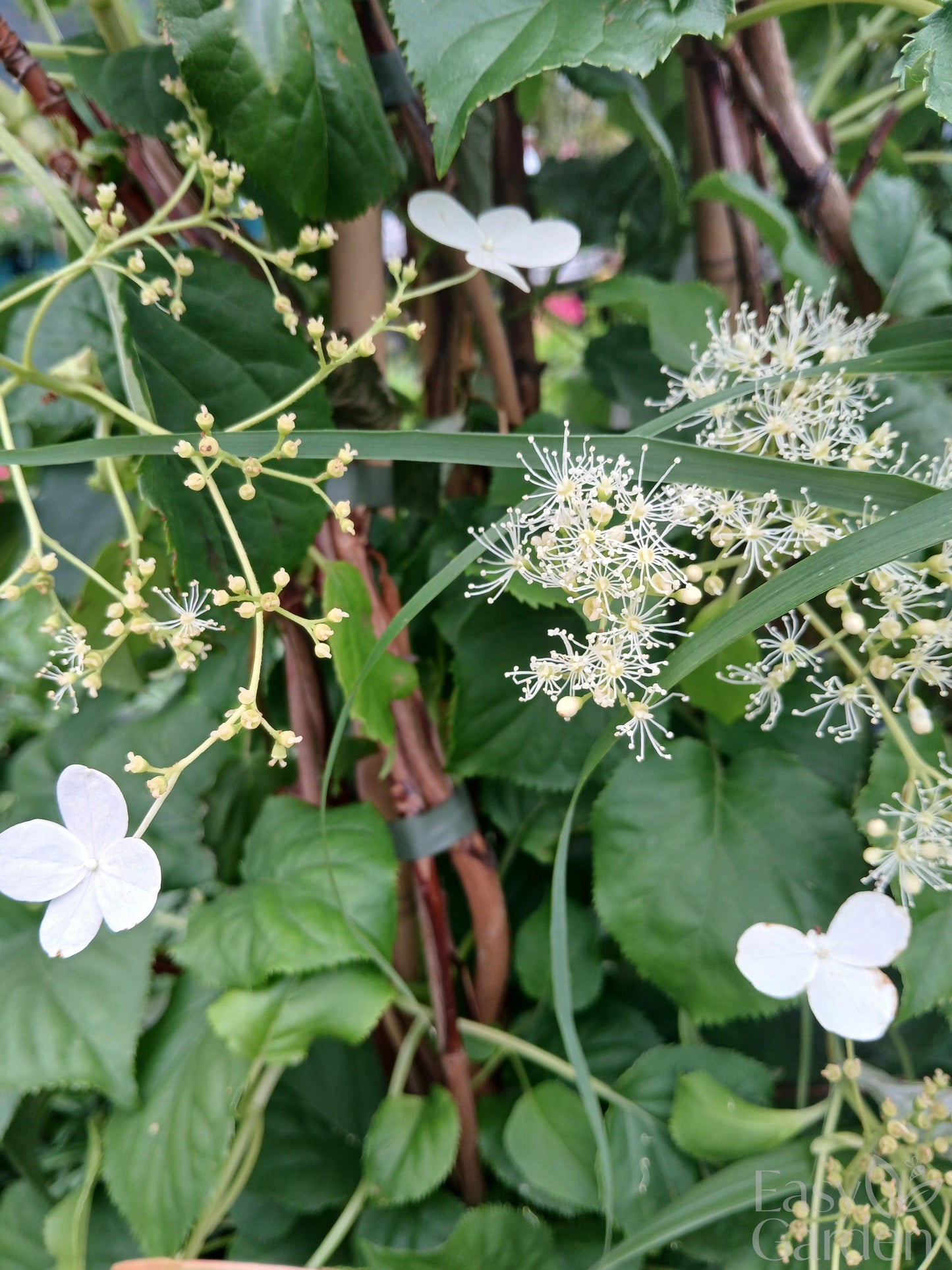
Hydrangea anomala subsp. petiolaris, commonly known as Climbing Hydrangea, is a vigorous, self-clinging deciduous climber that transforms walls, fences and mature trees with lush green foliage and broad, lacecap-like white flowerheads in early summer. Although slow to establish, it develops into a spectacular long-lived plant, making it one of the finest climbers for shaded gardens.
Its broad, oval leaves provide a dense green backdrop through spring and summer before turning soft yellow in autumn. During winter, the peeling brown bark adds valuable seasonal interest after the leaves have fallen. Given space to grow, it can eventually reach over 12m in height with a spread of approximately 4–8m, making it ideal for covering large structures.
| Attribute | Information |
|---|---|
| Botanical Name | Hydrangea anomala subsp. petiolaris |
| Common Name | Climbing Hydrangea |
| Plant Type | Deciduous climber |
| Flower Colour | White |
| Flowering Season | Early summer |
| Foliage | Broad oval green leaves with soft yellow autumn colour |
| Growth Habit | Vigorous, self-clinging climber |
| Position | Partial shade or full sun (with reliably moist soil) |
| Soil | Fertile, moist but well-drained, humus-rich soil |
| Mature Height | Over 12m |
| Mature Spread | Approximately 4–8m |
| Hardiness | Fully hardy in Ireland and the UK (RHS H5) |
| Wildlife Value | Attracts bees and other pollinators |
| Fragrance | Lightly scented blooms |
Plant in partial shade or full sun where the soil remains reliably moist. It is especially well suited to north- and east-facing walls, fences and other shaded structures. Young plants benefit from being tied into supports until they establish and begin to cling naturally.
Water regularly during the first few growing seasons while the plant establishes. Once mature, it is relatively resilient but performs best where the soil remains consistently moist.
Grow in fertile, humus-rich, well-drained soil. Incorporating organic matter before planting will improve moisture retention and encourage strong establishment.
Fully hardy throughout Ireland and the UK (RHS H5). Established plants require little winter protection, although a mulch around the base helps conserve soil moisture and protect the roots during prolonged dry or cold periods.
Minimal pruning is required. If shaping is necessary, prune immediately after flowering, removing only overcrowded or wayward shoots. Avoid hard pruning, as flowers are produced on the previous season's growth.
Climbing Hydrangea is slow to establish during its first few years but becomes increasingly vigorous and floriferous as it matures. Its self-clinging aerial roots allow it to attach naturally to suitable walls and tree trunks without the need for permanent support.


Choose with confidence
Use the Plant Finder, practical advice or our in-store team before deciding.
Explore straightforward guides for choosing, using and caring for garden products.
Visit the Advice CentreVisit Easy Garden to compare products in person and speak with our team.
Plan your visit