

Read practical advice
Explore straightforward guides for choosing, using and caring for garden products.
Visit the Advice CentreOutdoor plants
Everything useful in one place, with the most important information kept separate from the buying controls above.
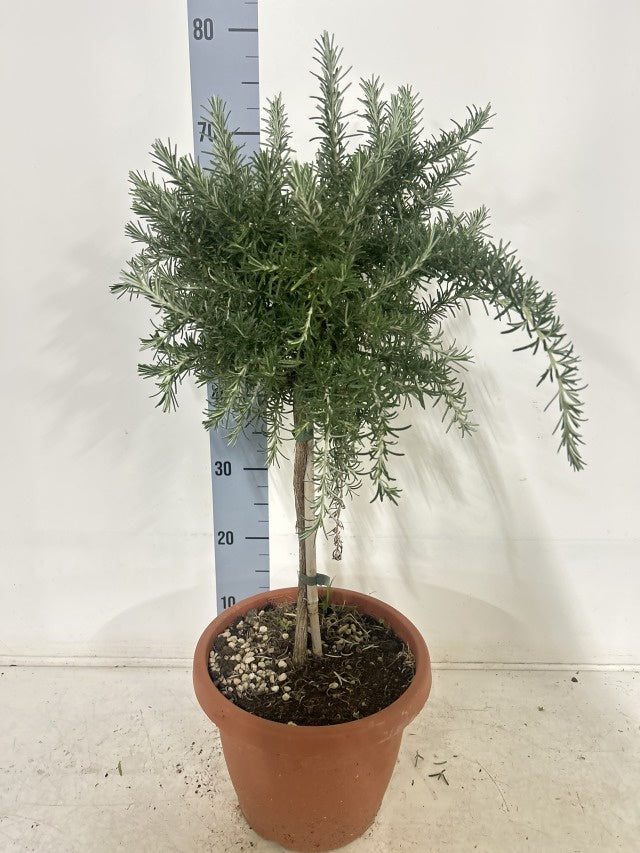
Rosmarinus 'Prostratus' (Stem Form) – 85cm Plant in P25 Pot
Plant Highlights: Elegant weeping standard form • Aromatic evergreen foliage • Nectar-rich flowers for pollinators • Ideal for patios and Mediterranean-style planting • Year-round structure and interest
Rosmarinus 'Prostratus' (now classified botanically as Salvia rosmarinus 'Prostratus') is a trailing form of rosemary, expertly trained into a standard (stem) shape. The cascading branches create a graceful, weeping canopy above a clear stem, making it an attractive feature for patios, entrances and decorative containers.
Its finely textured, fragrant evergreen foliage provides interest throughout the year, while small blue flowers appear from spring and may continue intermittently in mild conditions, attracting bees and other pollinating insects.
| Feature | Details |
|---|---|
| Botanical Name | Salvia rosmarinus 'Prostratus' |
| Common Name | Trailing Rosemary (Standard) |
| Plant Type | Evergreen herb |
| Foliage | Evergreen, aromatic, needle-like |
| Flower Colour | Blue |
| Flowering Season | Spring, with intermittent flowering in mild conditions |
| Position | Full sun |
| Soil | Well-drained soil |
| Habit | Weeping standard with cascading branches |
Plant in full sun in well-drained soil or a large container with good drainage. This Mediterranean herb thrives in free-draining conditions and dislikes prolonged winter wet. Water regularly while establishing, allowing the soil to dry slightly between waterings.
Lightly trim after flowering to maintain the shape of the canopy and encourage fresh growth. Avoid cutting into old woody stems where possible.
The standard form transforms trailing rosemary into an elegant focal point, combining ornamental appeal with fragrant foliage and seasonal flowers. It works beautifully in formal containers, Mediterranean-inspired planting schemes and sunny courtyards.
The nectar-rich flowers are attractive to bees and other pollinating insects, providing an early and valuable food source when in bloom.
Choose with confidence
Use the Plant Finder, practical advice or our in-store team before deciding.
Explore straightforward guides for choosing, using and caring for garden products.
Visit the Advice CentreVisit Easy Garden to compare products in person and speak with our team.
Plan your visit