


Read practical advice
Explore straightforward guides for choosing, using and caring for garden products.
Visit the Advice CentreOutdoor plants
Everything useful in one place, with the most important information kept separate from the buying controls above.
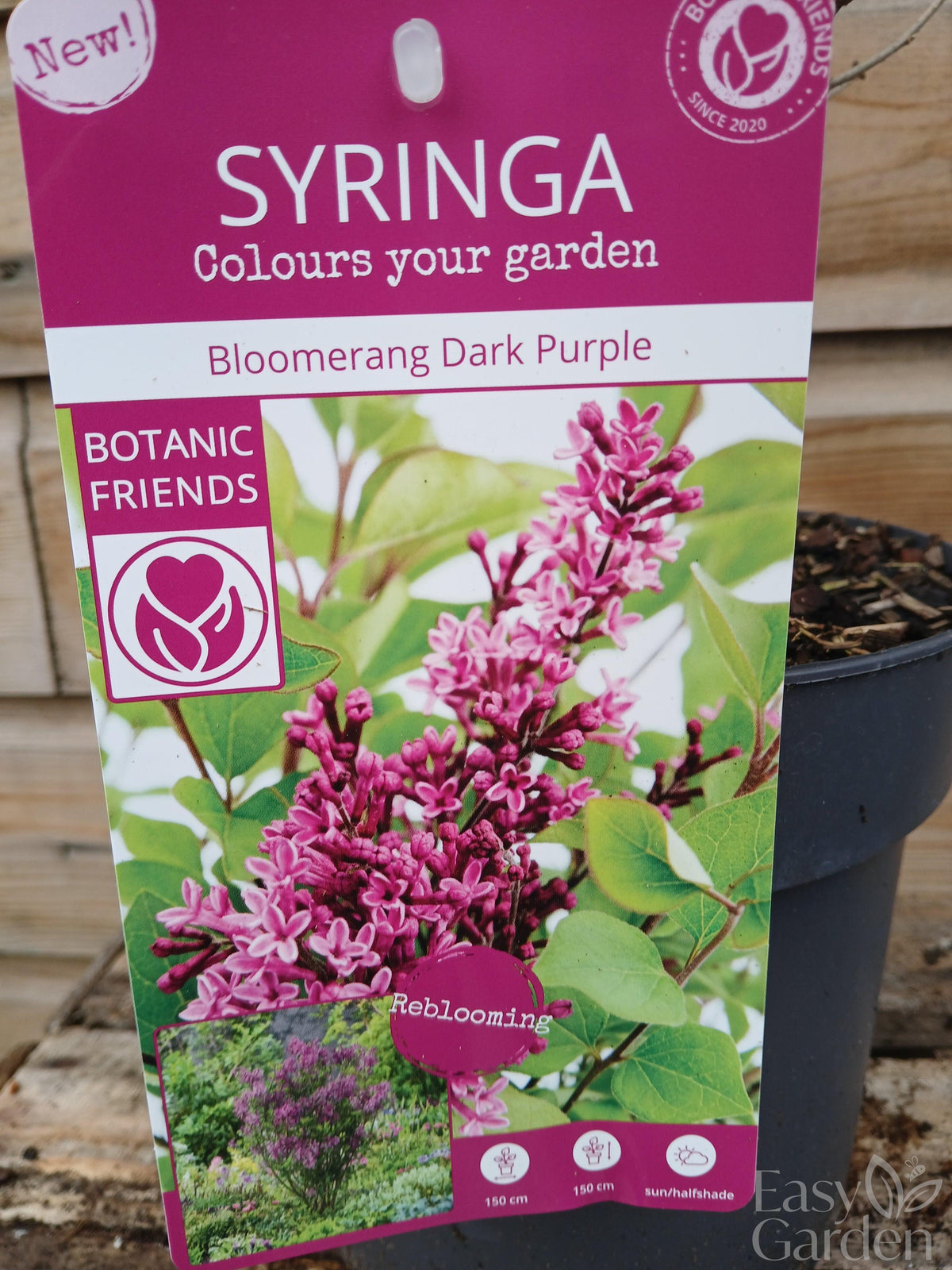
Syringa Bloomerang® 'Dark Purple' (PBR)
3 Litre Pot
Plant Highlights: Rich purple, fragrant flower clusters • Repeat flowering from late spring into summer • Compact, easy-to-manage shrub • Attractive to bees and butterflies
Syringa Bloomerang® 'Dark Purple' (PBR) is a compact reblooming lilac that extends the traditional lilac season with a second flush of beautifully scented flowers. Dense clusters of deep purple blooms appear in late spring, followed by further flowering through summer after a short rest, providing colour and fragrance long after most lilacs have finished.
Supplied in a 3 litre pot, this neat deciduous shrub is ideal for mixed borders, cottage gardens and large patio containers. Its manageable size makes it suitable for smaller gardens while still delivering the classic fragrance and charm associated with lilacs.
| Attribute | Information |
|---|---|
| Botanical Name | Syringa Bloomerang® 'Dark Purple' (PBR) |
| Common Name | Reblooming Lilac |
| Plant Type | Deciduous shrub |
| Pot Size | 3 litre |
| Light | Full sun or light partial shade |
| Growth Habit | Compact, bushy |
| Flower Colour | Deep purple |
| Flowering Season | Late spring with repeat flowering through summer |
| Fragrance | Highly fragrant |
| Soil | Fertile, well-drained soil |
| Watering | Water regularly while establishing and during prolonged dry spells |
| Mature Height | 1.2–1.8m |
| Mature Spread | 1.2–1.8m |
| Hardiness | RHS H6 (−20°C to −15°C). |
Plant in full sun for the most abundant flowering, although it will tolerate light partial shade. Choose an open position with good air circulation.
Grow in fertile, well-drained soil. Avoid areas that remain wet during winter, as lilacs perform best in freely draining conditions.
Water regularly during the first growing season. Once established, water during extended dry periods, particularly if growing in containers.
The fragrant flowers are rich in nectar and are attractive to bees, butterflies and other pollinating insects.
Remove spent flower heads after the first flush of blooms to encourage repeat flowering. Lightly shape the plant after flowering if required, removing any dead or crossing branches.

Choose with confidence
Use the Plant Finder, practical advice or our in-store team before deciding.
Explore straightforward guides for choosing, using and caring for garden products.
Visit the Advice CentreVisit Easy Garden to compare products in person and speak with our team.
Plan your visit