

Read practical advice
Explore straightforward guides for choosing, using and caring for garden products.
Visit the Advice CentreOutdoor plants
Everything useful in one place, with the most important information kept separate from the buying controls above.
Viburnum tinus
Supplied in an 11cm pot (P11)
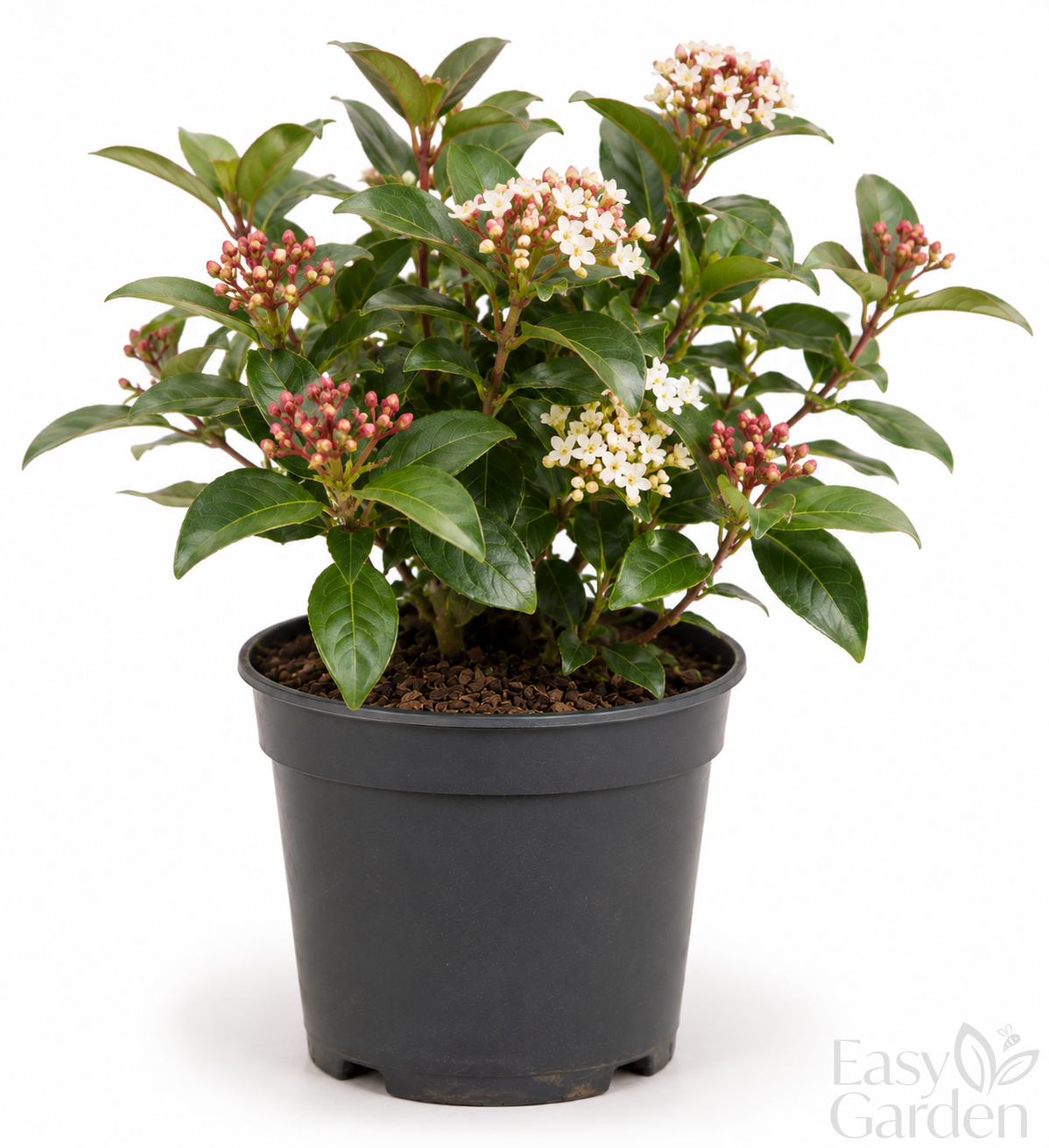
Plant Highlights: Pink buds opening into creamy-white flowers • Long flowering season from winter into spring • Glossy dark green evergreen foliage • Decorative metallic blue-black berries • Excellent for hedging, screening and shrub borders
Viburnum tinus, commonly known as Laurustinus, is a handsome evergreen shrub that brings flowers to the garden during the colder months. Rounded clusters of pink-tinged buds develop among glossy, dark green leaves, gradually opening into small, lightly fragrant, creamy-white flowers from winter into spring. After flowering, ornamental berries may develop, initially showing a distinctive metallic blue before darkening towards black. Its dense foliage provides an attractive green backdrop throughout the year.
Naturally bushy and rounded, Viburnum tinus is particularly useful for evergreen hedging, informal screening and mixed shrub borders. It can be maintained as a clipped hedge or allowed to develop into a substantial flowering shrub. Its ability to grow in sun or partial shade makes it useful in a wide range of Irish gardens, especially where winter flowers and lasting foliage coverage are wanted.
Flowers during the quieter months: Pink flower buds and pale blooms bring interest from winter into early spring, when relatively few shrubs are flowering.
Dense evergreen coverage: The glossy foliage creates useful privacy and shelter throughout the year.
Attractive ornamental berries: Metallic blue fruits, when produced, add a further seasonal feature after flowering.
Useful for pollinators: The flowers provide nectar and pollen for visiting insects during mild winter and spring weather.
Easy to shape: Its naturally bushy growth responds well to light trimming, making it suitable for both informal and maintained hedges.
| Attribute | Information |
|---|---|
| Botanical Name | Viburnum tinus |
| Common Name | Laurustinus, Laurustine |
| Plant Type | Evergreen flowering shrub |
| Foliage | Glossy, dark green, oval-shaped leaves |
| Flowers | Flattened clusters of small, creamy-white, lightly fragrant flowers opening from pink-tinged buds |
| Flowering Period | Mainly winter to spring, often December to April depending on weather |
| Berries | Ornamental metallic blue fruits, ripening towards black; fruiting can vary |
| Seasonal Interest | Evergreen foliage, winter and spring flowers, followed by occasional berries |
| Growth Habit | Dense, bushy, upright to broadly rounded |
| Growth Rate | Moderate |
| Position | Full sun or partial shade; tolerates shade |
| Soil | Moderately fertile, humus-rich, moist but well-drained |
| Soil pH | Acidic, neutral or alkaline |
| Mature Height | Approximately 2.5–4m when grown naturally |
| Mature Spread | Approximately 2.5–4m when grown naturally |
| Hardiness | RHS H4; tolerates approximately −10°C to −5°C in suitable conditions |
| Pruning | Light trimming after flowering, normally in late spring or early summer |
Plant in full sun or partial shade for healthy growth and a good flowering display. Viburnum tinus can also grow in more shaded positions, although flowering may be less abundant.
A sheltered position is beneficial, particularly in gardens exposed to cold easterly winds. It works well in mixed borders, along boundaries or as an evergreen hedge where sufficient room is available for its eventual size.
When planting for screening, allow for the shrub's naturally broad growth rather than relying on the small supplied pot size as an indication of its mature proportions.
Water thoroughly after planting and maintain consistent soil moisture while the roots establish, particularly during the first growing season.
Once established, water during prolonged dry spells, giving the root area a thorough soaking rather than frequent light watering. Avoid keeping the soil constantly saturated.
For container-grown plants, check the compost regularly during warm or windy weather. Water when the upper layer begins to dry, allowing excess moisture to drain freely.
Viburnum tinus grows in a wide range of garden soils, including loam, clay, sand and chalk, provided drainage is adequate.
It prefers moderately fertile, moisture-retentive soil enriched with organic matter. Where the ground is heavy or compacted, improve soil structure before planting and avoid areas that remain waterlogged during winter.
For container growing, use a quality peat-free loam-based compost in a pot with adequate drainage holes. As the shrub develops, it will need progressively more root space.
Viburnum tinus has an RHS H4 hardiness rating, indicating tolerance of approximately −10°C to −5°C under suitable conditions.
It grows successfully in many Irish gardens, particularly in sheltered locations with well-drained soil. Severe frost and cold, drying winds can damage leaves and flower buds, especially on young or exposed plants.
In colder gardens, a position near a sheltered wall can provide additional protection. Container-grown plants may need their pots insulated or moved to a more protected location during extended severe frost.
Avoid prolonged winter waterlogging, which can weaken roots and reduce plant health.
Viburnum tinus requires relatively little pruning when grown as a natural shrub.
After flowering, remove dead, damaged or crossing stems and shorten any excessively long shoots to maintain a balanced shape.
For hedging, trim lightly in late spring or early summer to encourage dense, branching growth. Avoid heavy trimming during autumn and winter, as this removes developing flower buds.
Apply an organic mulch around the root area in spring to help conserve moisture and improve soil conditions, keeping it clear of the main stems.
In reasonably fertile garden soil, Viburnum tinus generally requires little additional feeding.
Where growth is weak or plants are grown in containers, apply a balanced slow-release fertiliser in spring according to the manufacturer's instructions.
Keep the surrounding soil free from competing weeds while young plants establish. This is particularly important when planting several small shrubs to form a hedge.
Evergreen hedging: Dense foliage creates a leafy boundary that can be maintained with light trimming.
Garden screening: Mature plants provide useful year-round coverage along fences and property boundaries.
Winter-interest borders: The pink buds and pale flowers brighten mixed shrub planting during colder months.
Wildlife-friendly gardens: Flowers support visiting pollinators, while established shrubs provide cover for birds.
Mixed evergreen planting: Combines well with shrubs of contrasting foliage colour and texture, providing a dark green backdrop throughout the year.
Viburnum tinus is a naturally substantial shrub and can eventually reach several metres in height and width. Although supplied in a compact 11cm pot, it should be given sufficient room to mature or maintained at a smaller size through regular pruning.
The flowers develop during the colder months, so severe frost may occasionally damage open blooms without necessarily harming the whole plant. Berry production is variable and should be regarded as an additional ornamental feature rather than a guaranteed annual display.
Product: Viburnum tinus
Botanical Name: Viburnum tinus
Common Name: Laurustinus
Pot Size: 11cm (P11)
Supplied Format: Potted evergreen shrub
Product Barcode / SKU: 8713469668743
Choose with confidence
Use the Plant Finder, practical advice or our in-store team before deciding.
Explore straightforward guides for choosing, using and caring for garden products.
Visit the Advice CentreVisit Easy Garden to compare products in person and speak with our team.
Plan your visit