

Read practical advice
Explore straightforward guides for choosing, using and caring for garden products.
Visit the Advice CentreOutdoor plants
Everything useful in one place, with the most important information kept separate from the buying controls above.
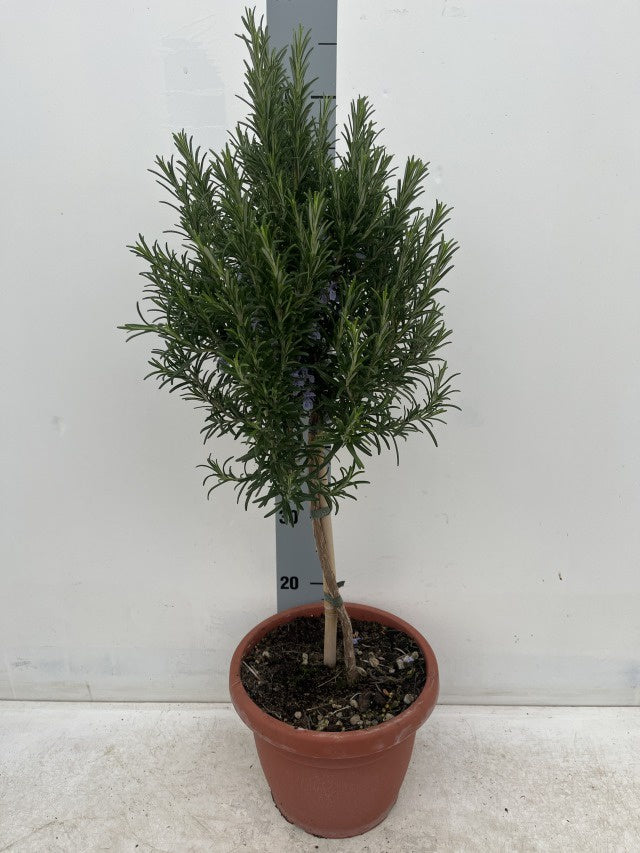
Rosmarinus officinalis (Rosemary – Stem Form) – supplied in a P25 pot, approximately 85 cm tall
Plant Highlights: Elegant trained stem form • Aromatic evergreen foliage • Culinary herb for harvesting • Blue flowers loved by pollinators
Rosmarinus officinalis, commonly known as Rosemary, is a fragrant evergreen herb valued for its needle-like aromatic foliage, culinary uses and year-round structure. Supplied in a stem form, it creates a more formal shape than a traditional bush rosemary, making it an attractive feature plant for patios, entrances and herb gardens.
The upright stem supports a rounded canopy of fragrant foliage, while small blue flowers appear during the flowering season, providing additional colour and attracting bees and other pollinating insects. Its Mediterranean character makes it especially suited to sunny, well-drained positions.
| Feature | Details |
|---|---|
| Botanical Name | Rosmarinus officinalis |
| Common Name | Rosemary |
| Plant Type | Evergreen culinary herb |
| Supplied Form | Stem form |
| Supplied Height | Approximately 85 cm |
| Foliage | Aromatic evergreen needle-like leaves |
| Flower Colour | Blue |
| Position | Full sun |
| Soil | Well-drained, light soil |
| Hardiness | RHS H4 (−10°C to −5°C). |
| Flowering Season | Spring to Early Summer (April to June) |
Plant in a sunny position with free-draining soil. Rosemary performs best where excess moisture can escape easily and is particularly well suited to gravel gardens, raised beds and containers.
Water regularly while establishing, then only during prolonged dry periods. Container-grown plants may need more frequent watering during warm weather, but avoid keeping the roots wet through winter.
Pick sprigs as required throughout the year for culinary use. The aromatic leaves are ideal for flavouring roasted vegetables, breads, potatoes, poultry and Mediterranean-style dishes.
The blue flowers provide a valuable nectar source for bees and other pollinating insects during flowering.
Trim lightly after flowering or harvesting to maintain the rounded stem form and encourage bushy growth. Avoid cutting back into old woody stems without green growth, as these may not regenerate well.
Choose with confidence
Use the Plant Finder, practical advice or our in-store team before deciding.
Explore straightforward guides for choosing, using and caring for garden products.
Visit the Advice CentreVisit Easy Garden to compare products in person and speak with our team.
Plan your visit